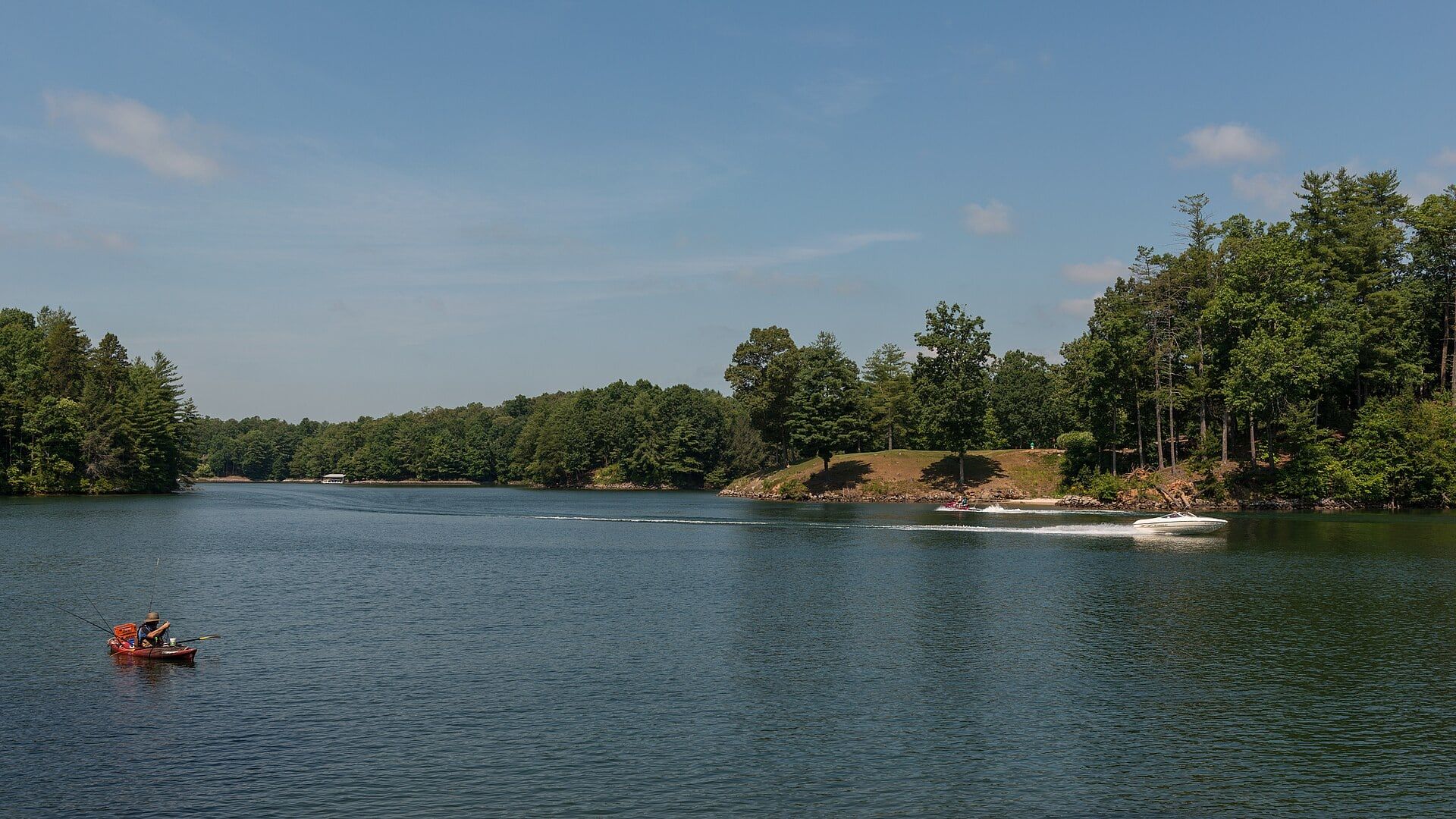
Lake Keowee is a Duke Energy lake, part of the Keowee-Toxaway Project (FERC No. 2503), so a dock on Keowee needs Duke’s written permission before any work starts. This guide covers who issues the permit, what the application needs, the fees, the timeline and the design rules, plus the county permits that sit alongside. Rules and fees change, so confirm the details with Duke before you plan.
Who issues dock permits on Lake Keowee?
Duke Energy Lake Services. You need Duke’s prior written authorization for a new dock, for changes to a dock and for maintenance, and you apply online through Duke’s LAPS system.
Duke’s own FAQ says a permit is “most likely” needed, so assume yours needs one until Duke says otherwise. The rules and forms are on Duke’s permits and shoreline activities page.
What does a Keowee permit application need?
A registered survey, a plan and profile drawing of the dock, your county building permits, and a state stabilization permit where the bank work needs one.
- Registered survey of the lot.
- Plan and profile drawing. The plan shows the dock from above. The profile shows it from the side, from the bank down into the water.
- County building permits from Oconee or Pickens County (more below).
- State stabilization permit, where riprap or other bank work calls for one.
We visit the site and measure water depth, then draw the plan and profile and file the application with Duke for you.
How much does a Lake Keowee dock permit cost?
About $1,000 in Duke fees for a new dock. That is a $500 Individual Private Facility fee plus a $500 Keowee-Toxaway Habitat Enhancement Program fee, under Duke’s fee schedule effective January 15, 2025.
The $500 facility fee applies to new docks and to maintenance. The habitat fee applies to new docks and to shoreline stabilization. Older figures, such as a $350 fee, still circulate online and are out of date. Check the current numbers on Duke’s fee schedule or with Lake Services before you budget. County permit fees are extra. For the dock itself, see our guide to dock costs on Keowee and Hartwell.
How long does a Keowee dock permit take?
Local builders put Duke’s review at about 20 to 30 days. That is a builder figure, not a promise from Duke.
Once issued, a Duke permit is valid for one year, so the dock has to be built inside that window. One local builder’s FAQ puts the whole job at about a month for permits plus two to three months to build, three to four months in all. Our guide on how long it takes to build a dock covers the schedule.
How big can a dock be on Lake Keowee?
Local builders and realtors read Duke’s 2014 shoreline guidelines as capping a private dock at 1,000 sq ft, counting the walkway and roof, with up to two slips. Because that is their reading rather than Duke’s wording, check them in Duke’s shoreline management guidelines or with Lake Services.
| Rule | Limit | Source |
|---|---|---|
| Size | 1,000 sq ft, walkway and roof included | Duke 2014 guidelines, as builders read them |
| Shoreline | At least 100 ft, for lots deeded after Sept 1, 2006 | Duke 2014 guidelines, as builders read them |
| Slips | Up to 2, plus 2 jet ski lifts | Duke 2014 guidelines, as builders read them |
| Length | Up to 120 ft, and no more than 1/3 of the way across the cove | Duke 2014 guidelines, as builders read them |
| Height | One story; an unroofed sundeck is allowed | Duke 2014 guidelines, as builders read them |
| Flotation | Encapsulated; bare foam out by Sept 1, 2018 | Duke |
| Permit term | 1 year | Duke |
| Fees, new dock | $1,000 | Duke fee schedule of Jan 15, 2025 |
The cove rule matters on a narrow cove: there, the 1/3 limit can stop a dock well before it reaches 120 ft.
Why does Keowee require encapsulated flotation?
Duke required unencapsulated foam to be removed from docks by September 1, 2018, so floats on a Keowee dock need the foam sealed inside a shell. Bare foam breaks down in the water and sheds pieces into the lake.
We use encapsulated flotation. If you are buying a Keowee house with an older dock, look under it before you close; our guide to buying a lake house with a dock lists what else to check.
When can you work on a Keowee bank?
In Duke’s Impact Minimization Zones, not from March through June: Duke’s guidelines, as local builders read them, say no shoreline stabilization is allowed there in those months. Banks 2 ft high or less get enhanced riprap or bioengineering only, not a seawall.
If your lot is in one of these zones and the job includes riprap, plan the bank work for July through February. Confirm the zone and the dates for your lot with Duke Lake Services. Our riprap and shoreline page covers the work.
Which county permits do you need?
Oconee and Pickens counties each have their own rules, and the county building permits go in with your Duke application.
Oconee County
Oconee requires permits for new construction. Its Lake Overlay District covers land within 750 ft of full pond (800 ft), and there is a 25 ft vegetated buffer along the shore.
Pickens County
Pickens publishes a citizen’s guide to dock electrical work. It calls for a separate permit for floating structures, two 8 ft ground rods at least 16 ft apart, and junction boxes at least 24 in above the deck. Pickens County’s number is 864-898-5950. We bring in a licensed electrician for dock wiring.
Federal permits
One point we have not confirmed: some work in the water may also need a federal Section 404 general permit from the Army Corps of Engineers. Ask Duke Lake Services if your project needs one.
How do you contact Duke Lake Services?
Call 800-443-5193 or email LakeServices@duke-energy.com. Ask them to confirm the current fees, the size limits and any zone rules for your lot before you settle on a design.
Hartwell works differently: see Lake Hartwell dock permits, or our Lake Keowee page for more on this lake. For a Keowee dock, get a ballpark from the dock estimator or call (424) 423‑9302 to arrange a site visit.